

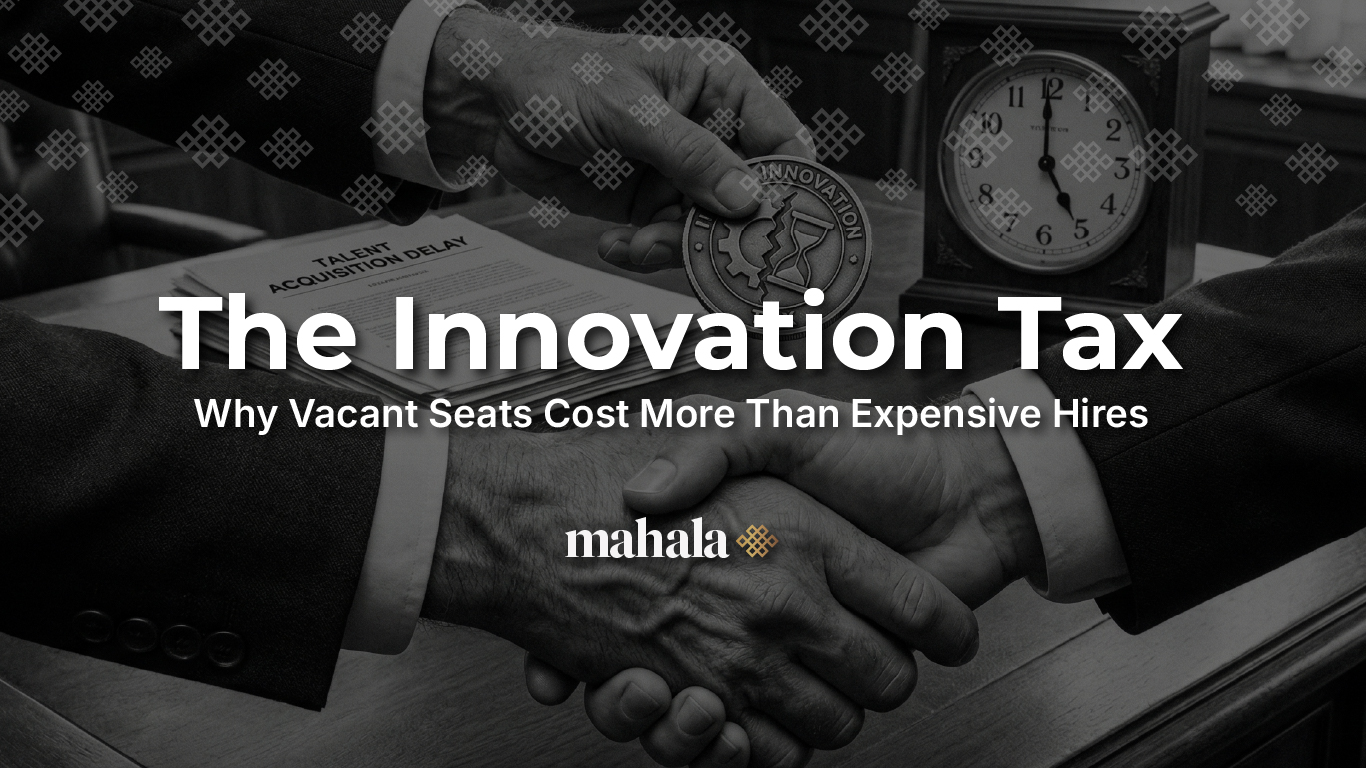
You don’t see it on the invoice. You see it on the P&L. We call it the Innovation Tax.
It represents the silent cost of a €600k strategic initiative sitting idle because HR is still "scheduling round 3" for a single engineer. In traditional IT, a month's delay was annoying. In AI, a month delay is a missed market cycle.
While your procurement team is redlining a contract clause from 2019, your competitor just shipped their model. You are saving pennies on process, but burning millions on opportunity cost.
That’s the Innovation Tax in action. It’s an invisible daily penalty companies pay when outsourced hiring chains move too slowly and lose out in finding the right talent. The cost shows up as delayed projects, lost specialists, and reputational damage that makes top talent quietly cancel their appointment with you.
Why Speed Now Defines Advantage
AI moves in months, not years. The organizations actually earning from it, roughly 10%+ of revenue, according to McKinsey, treat talent velocity as a competitive metric.
Every unfilled role is an operational drag: models delayed, roadmaps slipping, opportunities handed to faster competitors. What used to be an HR inefficiency has become a strategic liability.
Where the Tax Comes From
1. Safety Over Substance
Large intermediaries default to “safe” profiles: predictable CVs, conventional titles, minimal perceived risk. The result? Conformity masquerading as reliability. Harvard Business Review calls it familiarity bias and it kills innovation before it starts.
2. Bureaucratic Drag
Approvals, MSPs, subcontractors. Each extra checkpoint adds days. In one recent meeting, an ‘agile’ client told us they averaged 47 days from role approval to contract signature. By that time, the top 1 % of candidates had already signed elsewhere. Annoyed, not looking for your apologies.
3. Generalist Filters on Specialist Roles
Too many recruiters can’t tell a Data Engineer from an MLOps Engineer. Keyword strategy decides who advances, not the understanding of the specialist and his/her abilities and experience. The result is quality entropy: that exceptional talent you need never even reaches your desk.
What It Costs
Few firms calculate it, but they feel it:
- €60–120k in opportunity loss for every six-week delay on a €600k data initiative.
- Productivity loss from teams waiting on missing expertise.
- Employer-brand erosion when freelancers warn each other about slow, inefficient clients
It’s a tax no CFO ever thinks about budgeting, and no CTO should ignore.
How to Stop Paying it
- Collapse the Chain: Go direct or use a niche, service-focussed intermediary.
- Let Specialists Screen Specialists: Domain fluency halves time-to-match.
- Measure Speed Like Spend: Track time-to-contract the way you track cloud costs.
The Bottom Line
Stop budgeting for "hiring". Start budgeting for "speed". Every day a critical role sits open is a day you subsidize your competition. Don't pay the tax. Collapse the chain.
Stop paying the Innovation Tax. Start moving at the speed of your ambition.
Conclusion